
The Michael Gauntlets
A gear review

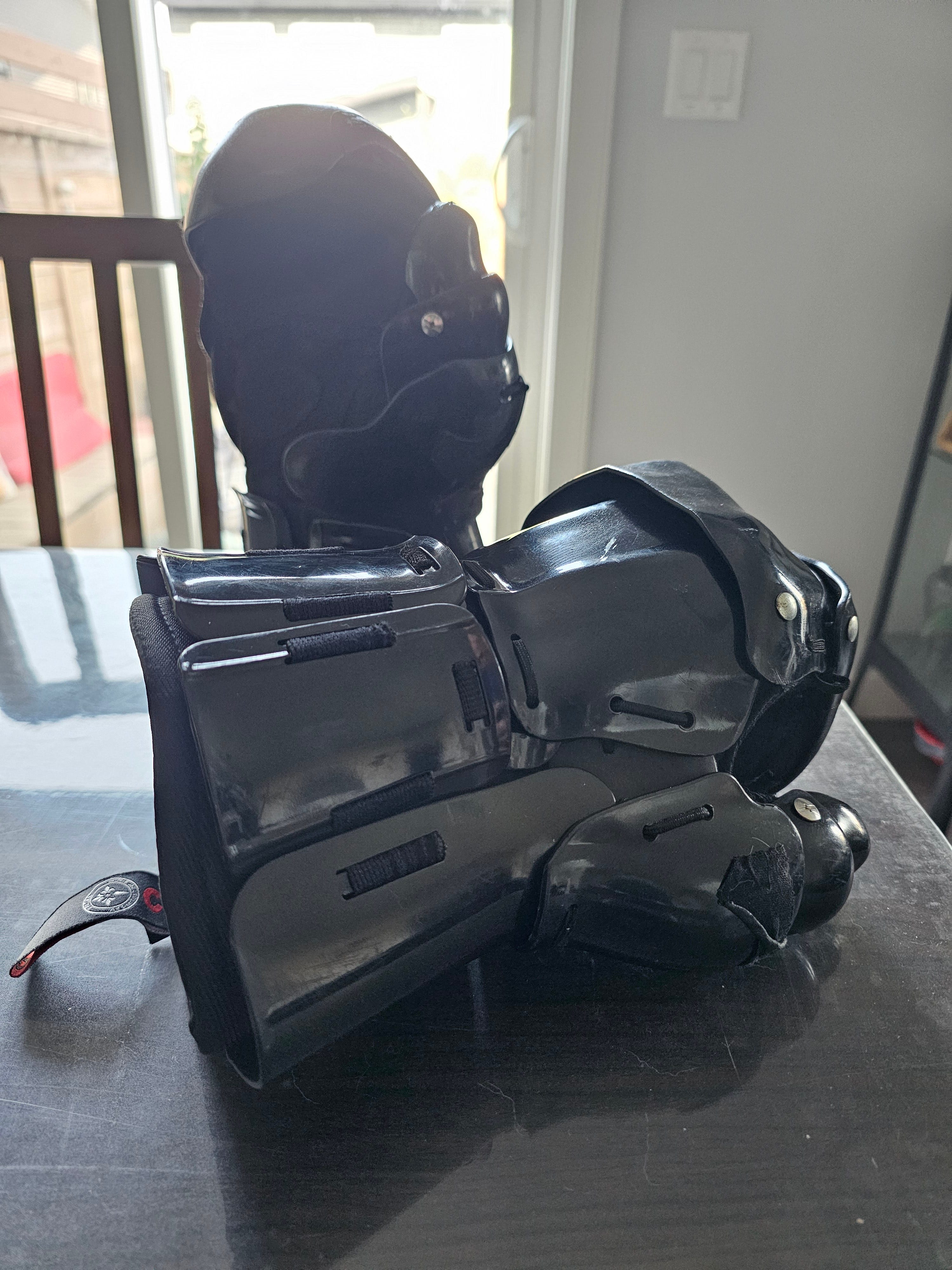
Introduction
For the last year or so, I have been fencing with the CFHG Michael gauntlets as my main longsword gloves. I have used them in weekly training, in solo work, and in multiple tournaments as small as local intramurals and as large as SoCal Swordfight and the Ars Gladii Open.
As a result, I feel I have a good understanding of these gauntlets. There are many things I really like about these gloves, but I have also experienced some decided drawbacks and frustrations. I am writing this review of these gloves in the hopes that it can help you, dear fencer, make a more informed decision of whether these gloves are right for you. I also hope that if the designers at CFHG are reading this, this review may help them refine the design of these gloves in future iterations.
The demands of longsword glove design
There’s an old story I have heard, about the days of King Henry VIII of England.
In 1520, King Henry held a summit with King Francis of France. The monarchs, natural rivals and competitors with each other, turned this summit into an immense competitive display of wealth, luxury, and power. It is known to history as “The Field of Cloth of Gold”. It being the 16th century, this event became a grand festival, with dancing and jousts and wrestling and all sorts of other aristocratic pastimes.
During the festivities, King Francis challenged King Henry to a friendly bout of fencing with two-handed swords in armour. King Henry declined, saying that no gauntlets could be made strong enough to withstand the strokes of the two-hand sword.
I’ve also heard the story told with the roles reversed, with Henry challenging Francis and the French King declining. It’s possibly apocryphal. Although I distinctly remember reading this story I can’t seem to track down the reference now. Therefore, take it with a grain of salt.
But, I do think the story is a useful one for illustrating that designing longsword gauntlets is really hard! And it was so even back in the 16th century when the art of the armourer was at its peak. To evaluate the quality of a set of HEMA longsword gloves, we have to keep in mind these challenges. We need to measure the quality of the gloves in reference to how well they meet those challenges.
Sometimes I think that HEMA longsworders forget how unique the longsword is among the fencing weapons.
With both hands on the hilt and strikes powered by the whole body, the longsword can hit harder than any other of the swords we typically use in fencing. Certainly it’s easier to generate power and translate that into a hard strike with the two-handed hilt than with one-handed swords.
Additionally, the longsword can create powerful strikes across a wider range of angles than one-handed swords. With the leverage of both hands on the hilt, the longsword can create powerful, snappy blows from positions where a one-handed sword might struggle to create power without an additional chambering movement.
What this all means is that longsword equipment both has to be sufficiently protective against the hardest strikes in HEMA fencing, and has to expect those strikes to come from almost any angle. At the same time, fencers demand that their equipment be as light and mobile as possible. We want our gear to allow us to move freely and to fence as unimpeded as we can. These are contrary demands. As everyone well knows, better protection usually means worse mobility and vice versa.
Longsword gloves struggle with these constraints more than any other piece of gear. The hands are probably the most frequently struck target in longsword fencing. The bones of the hand are smaller and more vulnerable than other bones in the body, and it could be very easy to fracture one. The hands are also critical to a person’s ability to work and function in daily life. Protecting them is a critical safety requirement for that reason. Yet at the same time, longsword fencing often demands hand mobility: Loosening and squeezing of the fingers and active shifting of the grip on the hilt.
So in evaluating longsword gloves, we are evaluating it for how well it protects one of the more vulnerable and important parts of the body AND for how well it enables us to fence effectively. These are contrary objectives, and so the gloves will have to strike a balance between them. At the same time, cost is also a critical factor. The best gloves in HEMA won’t be helpful if most fencers cannot afford them.
Testing Conditions
I first obtained a pair of CFHG Michael gloves at SoCal Swordfight, in February of 2024. The South Coast Swords vendor table had a pair, and as I had been interested in getting a replacement for my Sparring Glove mittens I decided to buy the Michaels that day.
My initial plan at SoCal Swordfight was to use my Sparring Gloves, as I was used to them by that point and I didn’t think it was wise to change equipment on the eve of competition. However, events changed my plans. I discovered that the finger pocket on my Sparring Gloves had ripped. Short on time to make repairs, I decided to put my new Michaels into use.
From that point forward, the Michaels became my main gloves for longsword fencing. I wore them throughout my fencing at SoCal Swordfight. I wore them for weekly training sessions and sparring. I used them for solo training. I used them in local intramural tourneys and sparring days. I also wore them at the Ars Gladii Open in September of 2024. In addition to longsword use, the Michaels became my go to gauntlet for single-handed fencing with my arming sword.
All told, I have been using the CFHG Michael gauntlets for a year and seven months as of the writing of this article (February 2024 to September 2025). I have used them for weekly training, and put them through their paces in two major tournaments. I believe I have used them extensively enough at this point to speak confidently as to their characteristics.
Strengths
These gloves are a joy to fence in. I’ve tried many mitten gauntlets, and these are my favourite to use. The inner glove inside the plastic plates allows for a good range of finger flexibility. I typically fence with a loose grip on the hilt, and I start my cuts by squeezing the fingers to add ‘snap’ to the start of my attacks. The Michaels have been very good for permitting me a good range of motion in the fingers. As well, the wrist cuff is constructed cunningly of separated plates in a way that is protective but also allows for good mobility.
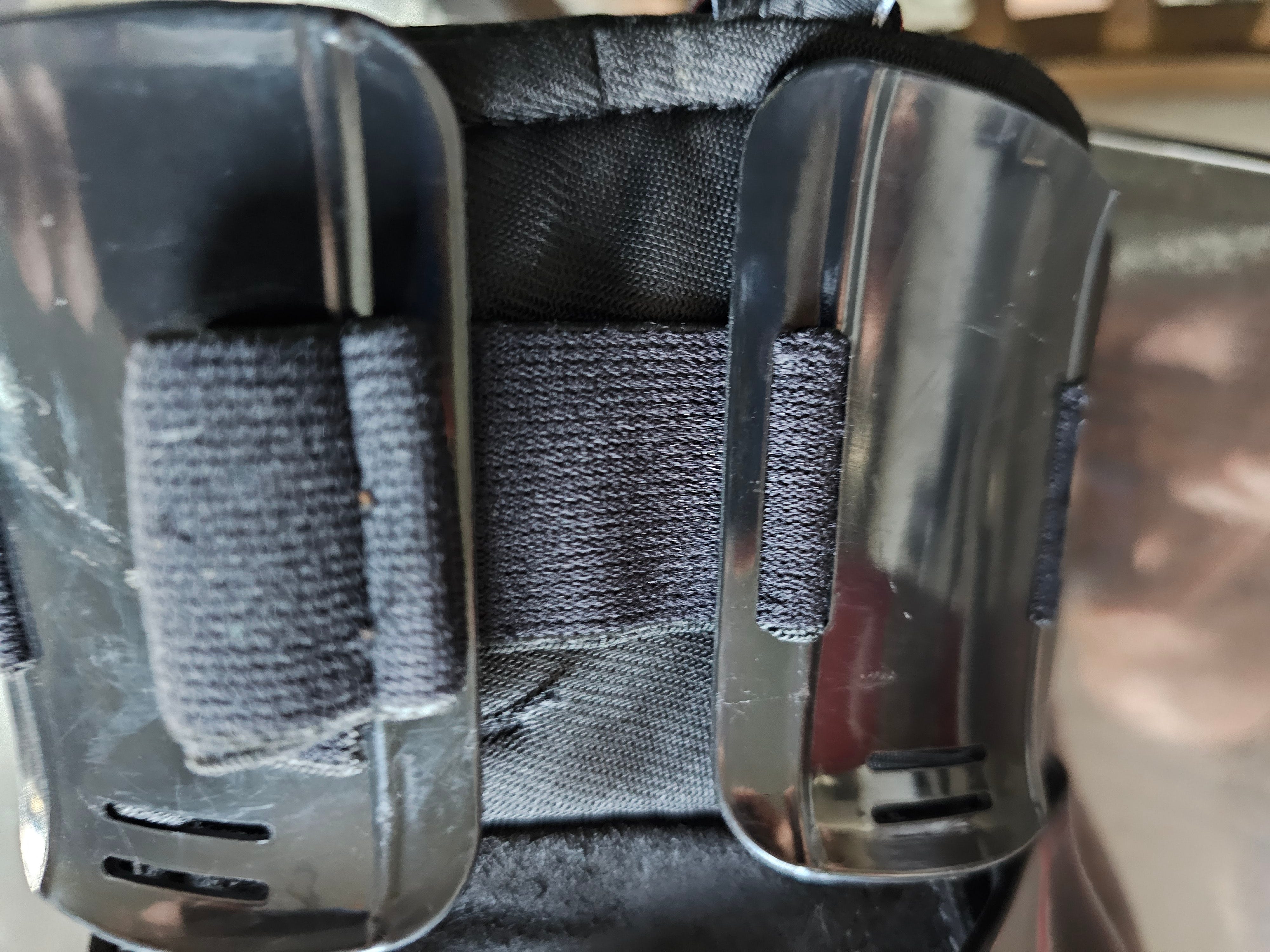
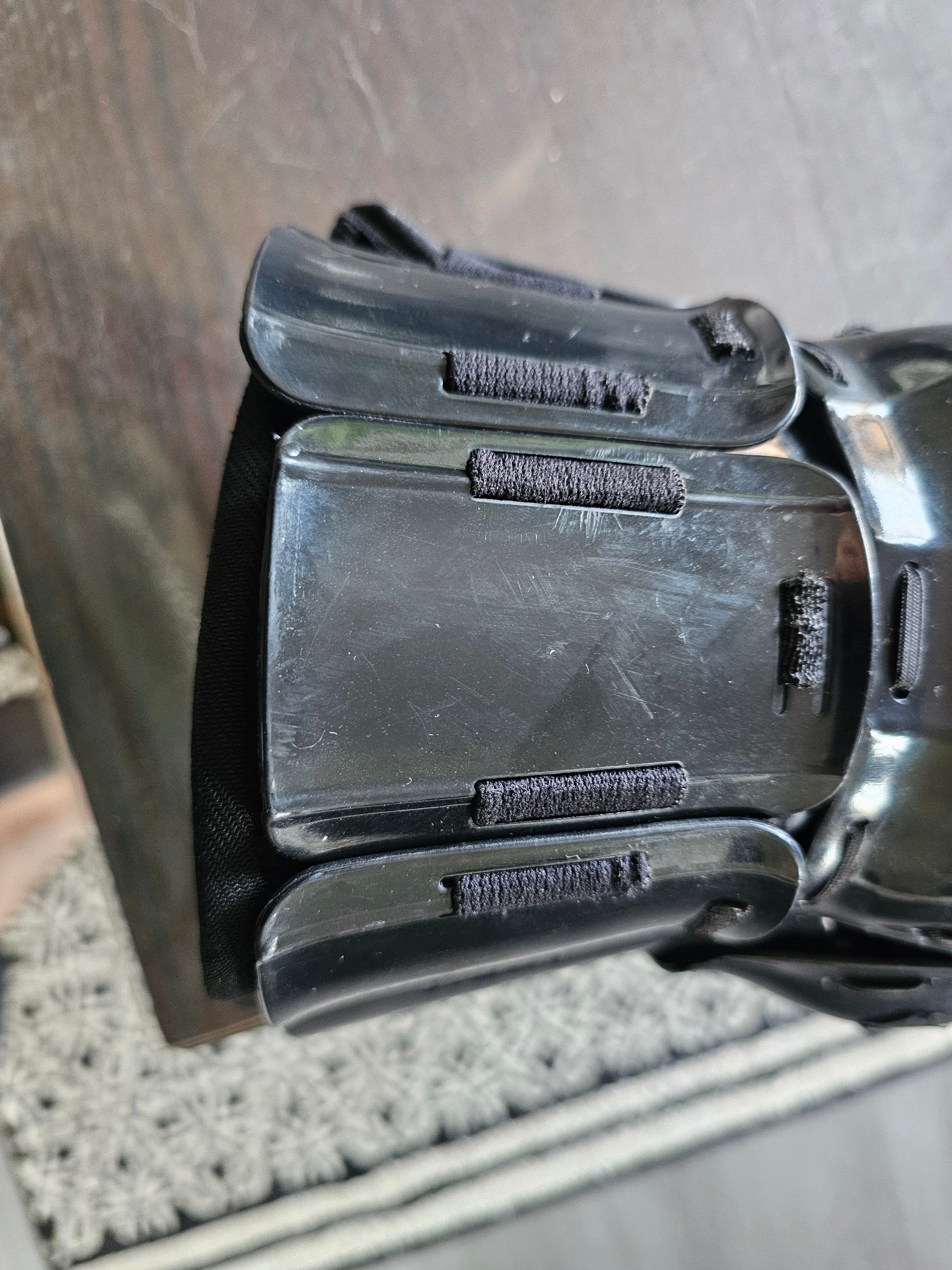
The gloves are also remarkably light for their level of protectiveness. I’m not sure what kind of plastic has been used in their construction, but I find the Michaels notably lighter than other, similar gauntlets like the SPES Heavies.
The protectiveness of the glove is also generally very good. When your hand is closed on the hilt of a sword, your fist is enclosed in a hard, round sphere of angled plastic. The angulation of the plates encourages blows and thrusts to glance off rather than hit square, which is beneficial for safety.
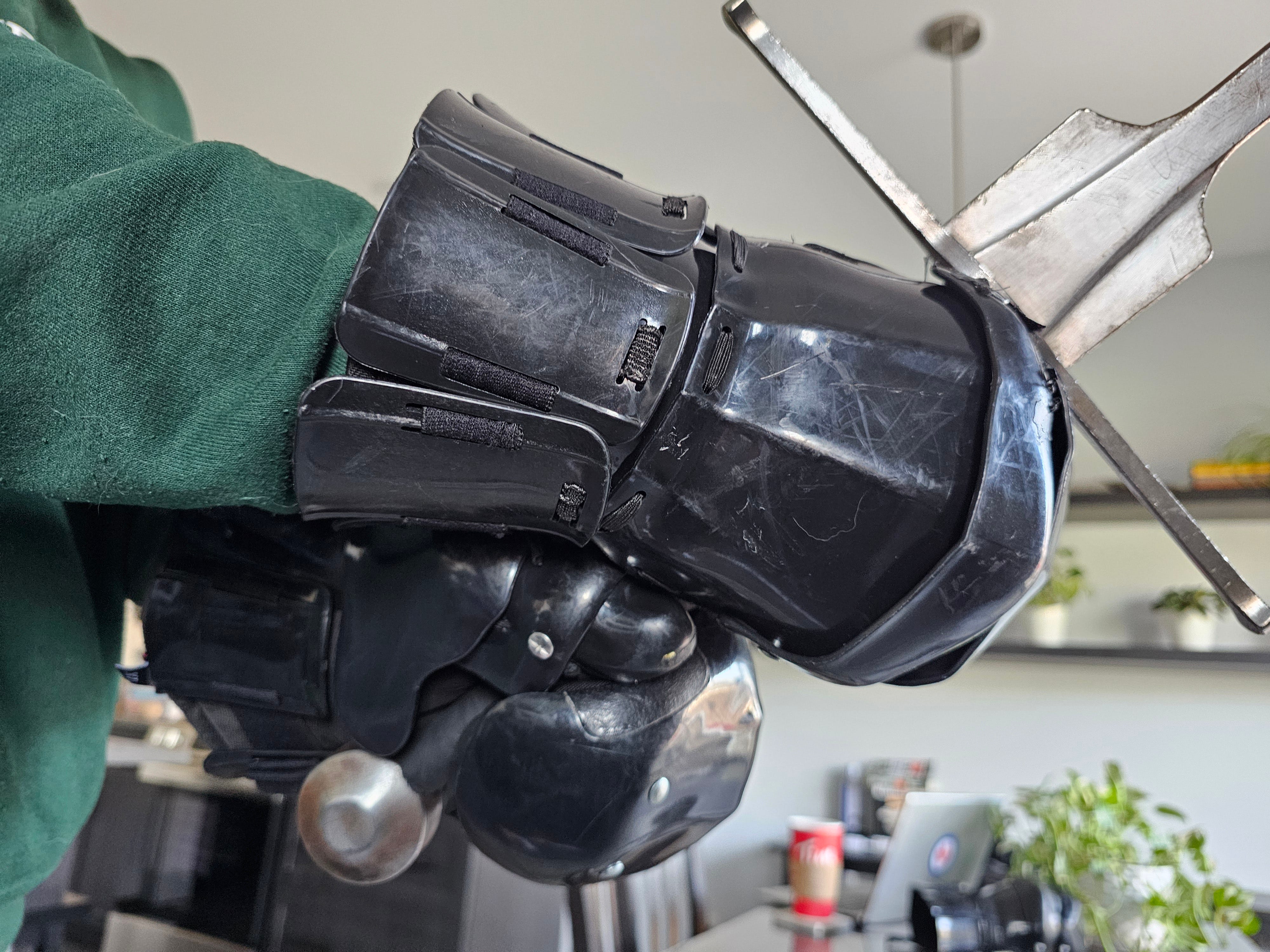
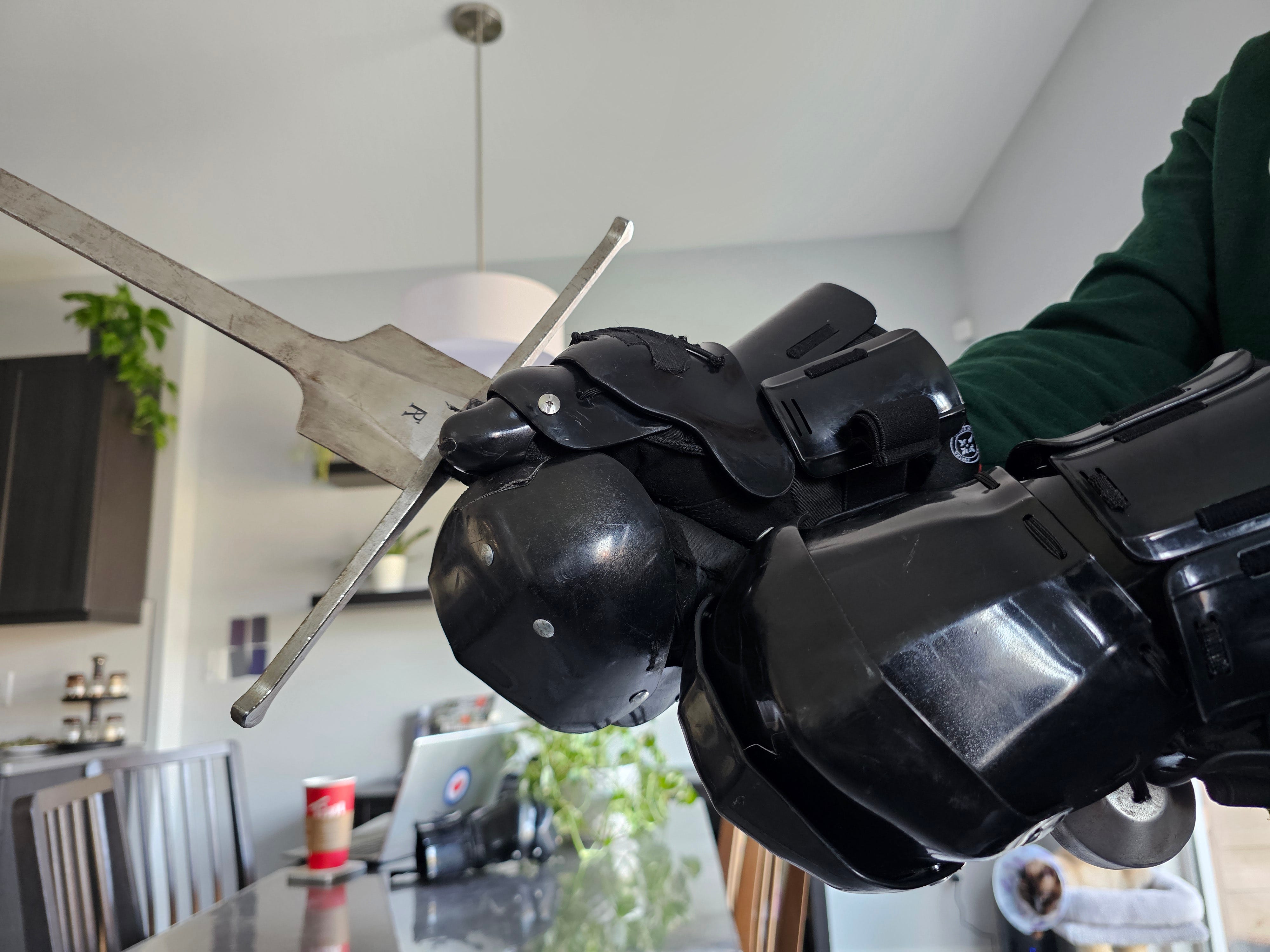
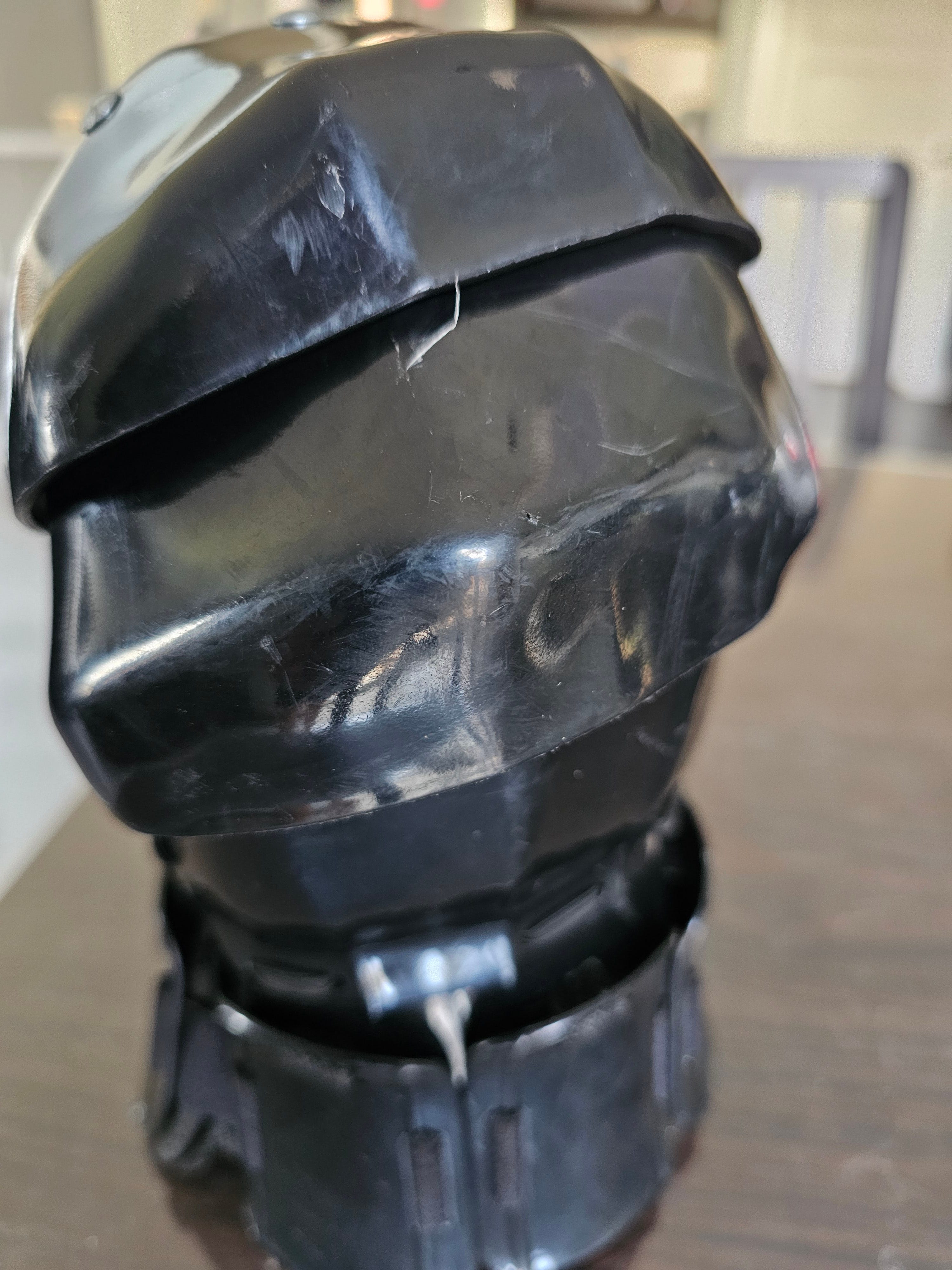
I particularly appreciate the thumb design. The thumb curves around the sides of your thumb well, giving you a good range of protection and ‘grounding’ the thumb plate against the hilt of the blade effectively. I take hand hits as much as anyone, and the Michaels offer very good hand protection.
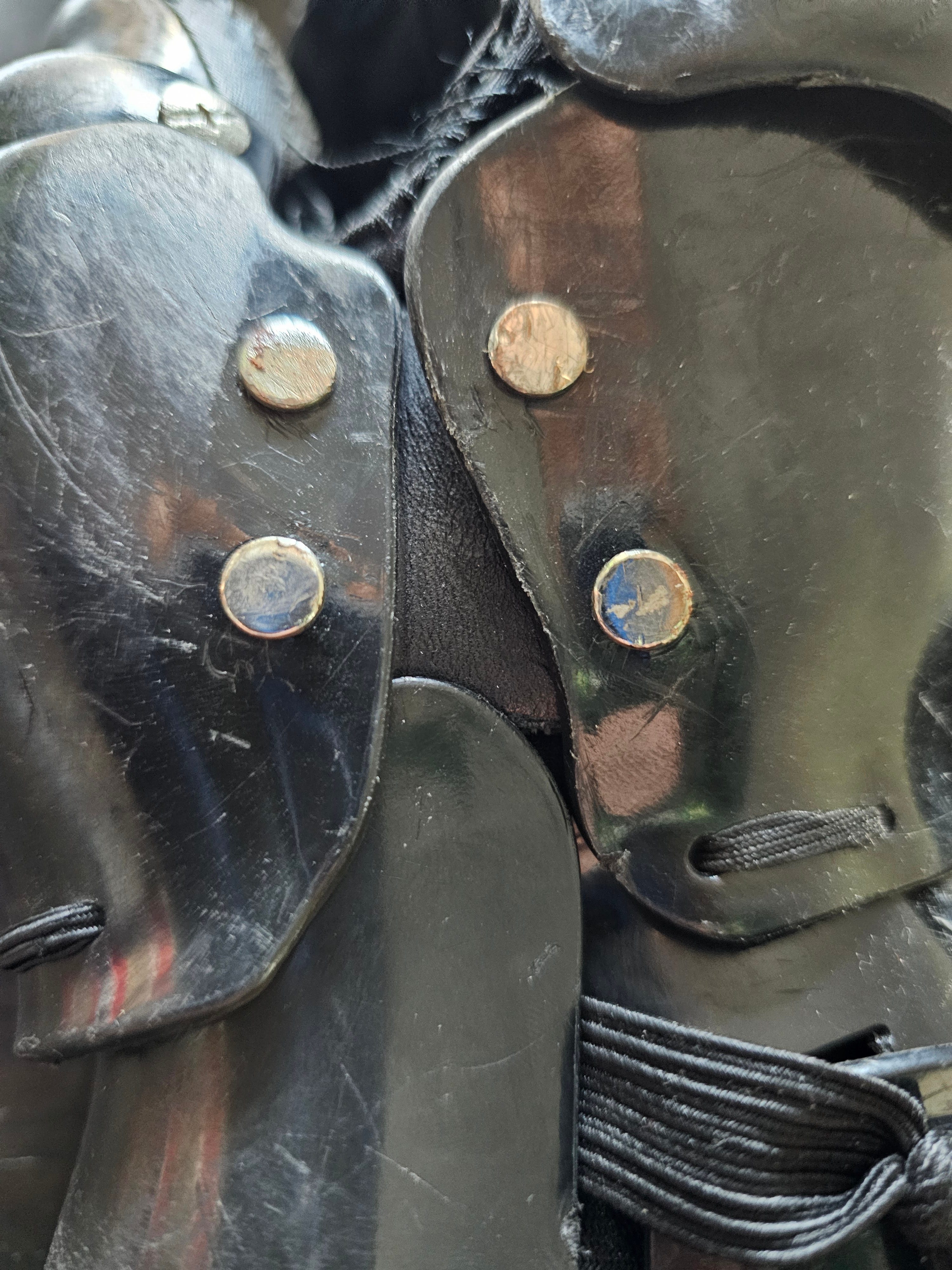
Now many of the plates of the glove are held together with these elastic cords, as you can see in these picture.
In the weaknesses section, I will discuss further my concerns about the durability of the gloves. However, one advantage about these cords is that they’re generally easy to replace. The Michaels seem designed around the idea of being easily fixed rather than being highly durable. While the elastic cords do break from time to time, typically they are quite easy to replace.
The Michaels also come with a nice little carrying bag, and a small packet of spare parts for making repairs to your glove. I approve of this, I think it’s good customer service. It also communicates to the fencer that these are a glove which you can expect to be able to repair.
So on the whole, the Michael gloves are light, reasonably comfortable, offer good mobility for a mitten gauntlet, and are very protective across most angles. These are all very good things for a set of longsword gauntlets. But…
Weaknesses
Now, in full disclosure, the set of Michaels I am currently using are my second set.
The first set of Michaels were the ones I acquired at SoCal. These were an older version of the glove. On this model, the plate of the back of the hand was connected to the thumb plate by a piece of leather, riveted to both plates. This is a clever design in that it permits flexibility. But, after a few bouts at the pools stage of longsword, the rivets of this piece of leather tore out and my glove was hanging in pieces.
Thankfully, a leather-worker with a stand at the event was able to repair it for me and I was able to continue competition. But this incident turned out to be a premonition of issues to come.
My biggest problem, by far, with my Michael gauntlets has been a lack of durability in their construction.
What do I mean by this?
I mean that my Michael gauntlets are forever falling apart and having to be repaired.
Now, as I previously noted, the Michael gauntlets are to an extent built for you to repair them. Many of the protective plates are tied together with elastic cords, which facilitates relatively easy replacement if they take a hit and the cord is severed. Those repairs are pretty simple and straightforward.
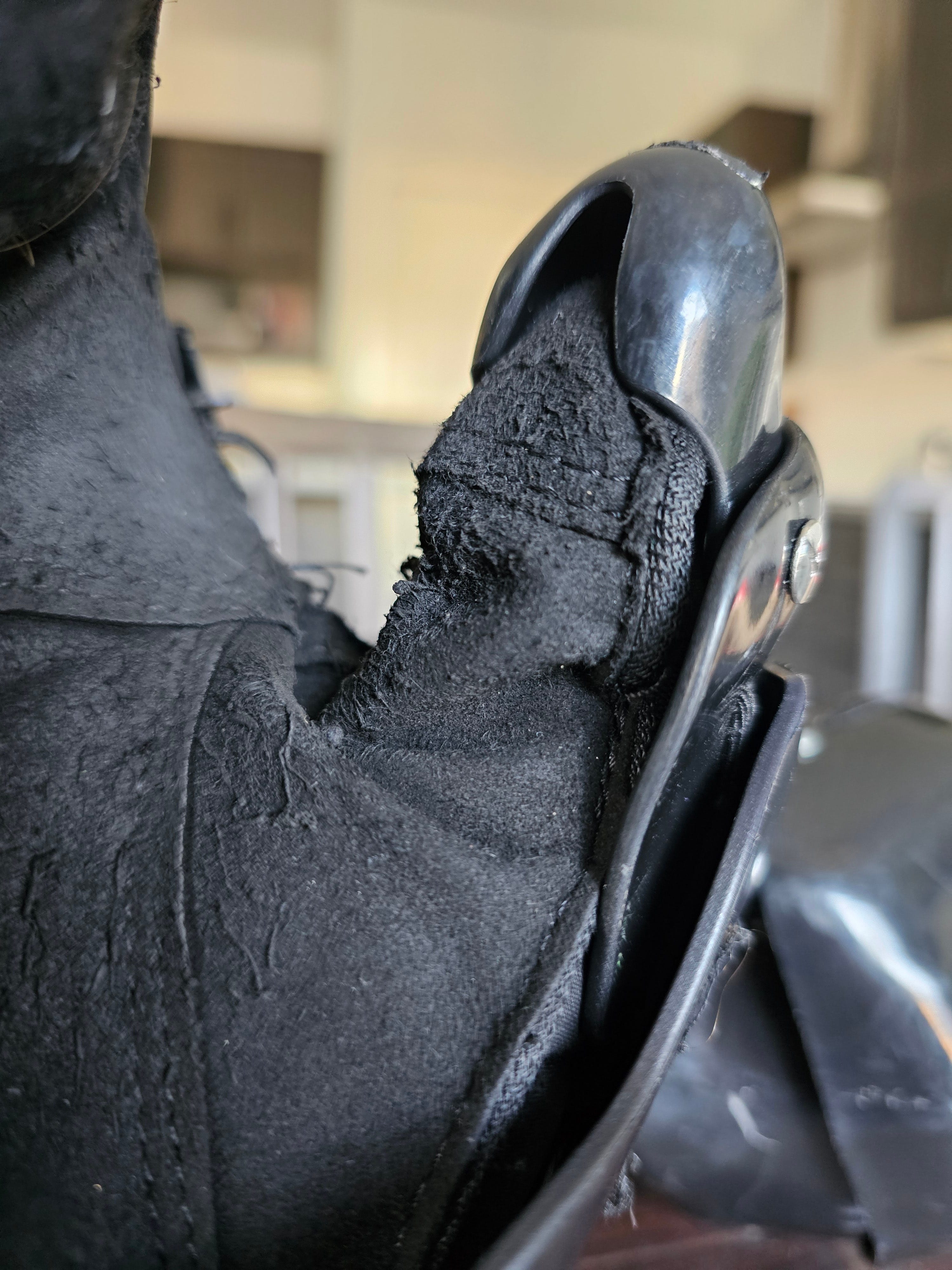
However, I have had to make more substantial repairs particularly to the underglove itself. Here are some of the repairs I have had to make:
-Holes wear into the material of the thumb of the glove
-The seams at the side of the hand burst open
-The loops that allow the underglove to be tied to the plates pull off the glove.
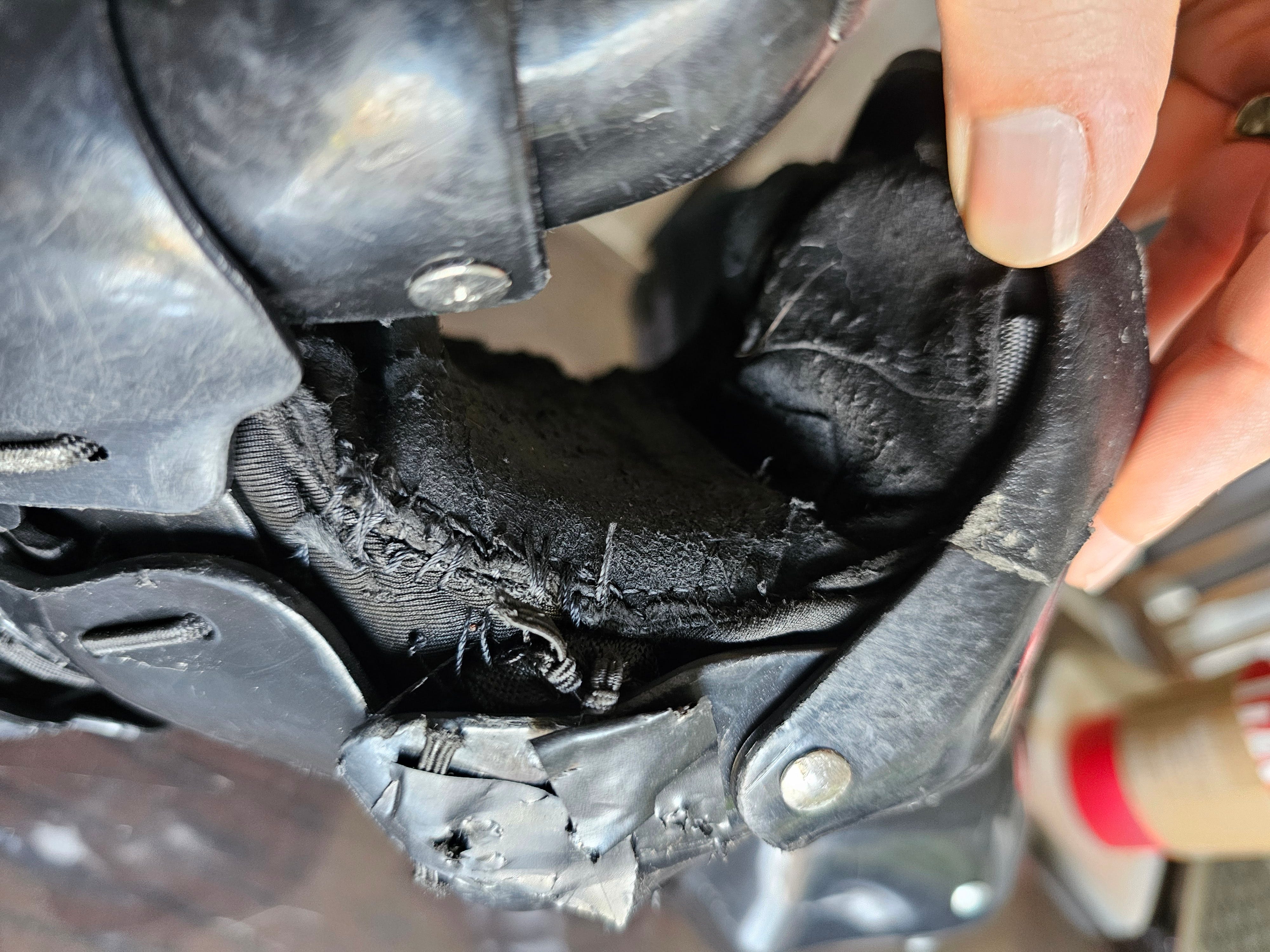
These repairs are less trivial than switching out an elastic cord. Often, they have to be repeatedly made. I will fix a hole in one thumb, and then the next week the other glove has developed a similar hole in the thumb. The palm of the glove is I think made of a puncture-resistant material, because when sewing the glove back together I have often had a hell of a time puncturing it with a needle.
I used that first set of Michaels, the SoCal pair, until a crack developed in the thumb. I had frequently had to repair them, so I had already acquired a replacement pair before that. The replacement pair then went through basically the same set of issues with the underglove as the first pair. This has been a consistent source of frustration with what are otherwise excellent gloves.
One of my students suggested that the durability issues I have encountered with my Michaels is due to how I use my grip in fencing. As said before, I typically grip the sword loosely but firmly in my normal guard and then employ finger squeeze to impart ‘snap’ into my cuts. The loosening and squeezing of my fingers repeatedly stresses the glove and creates friction between glove and hilt, causing material failures. It is possible this is the case. I know other fencers who haven’t had these durability problems.
I can only speak to my own experience, and my Michaels have had consistent durability issues with the underglove.
Conclusions
As of the writing of this article, the CHFG Michaels cost $394.00 USD on South Coast Swords, which is as I understand it their main North American distributor. That’s before considering shipping. That is $545.00 Canadian, and this again before considering shipping.
In point of comparison, the HF Armoury Black Knight gauntlets can be purchased from Purpleheart Armoury for $249.00 USD/$344.00 CAD, before shipping. The HF Black Knights are comparable in protection, and not notably inferior in mobility or weight either.
The Michaels aren’t cheap by any means. If I were to make any suggestions to CHFG, I would say: The plate design of the gauntlets is very good, but the durability of the under-glove needs to be improved for future models. At this price point, I don’t think it’s unreasonable for a fencer to expect an under-glove that doesn’t have to be constantly sewn back together.
I don’t want to take an overly negative tone here. By all means, these are very good gloves in many aspects: They are very protective, quite mobile for a mitten gauntlet, and very light. I quite enjoy fencing in them, and at no point have I ever taken a hand hit on them which has made me feel endangered for my fingers.
They would easily be my favourite mitten gauntlets for longsword, except that the durability problems I have encountered with my Michaels have been such a constant, consistent issue.
Ultimately, the main question is this: Do I recommend these gloves?
Yes, but not without caveats. They are a very good gauntlet for fencing, but be prepared to be doing glove repairs on them. Whether that’s acceptable or not to you at this price point is ultimately an individual choice. I don’t regret my Michaels at all, because I find them so excellent for my longsword practice, but I sure do wish the under-glove held up better every time I am sewing it back together.
I hope these review was useful to you, and if representatives of CHFG are reading this I hope it assists in future improvements of these gloves.
Hey Eric, I am a Hema practitioner from Sydney, I have read and forward your article about Micheal gloves to the Maker . The Maker like to thank you for your valuable feedback and comments. And like to let you know they have already identified the issue you have mentioned i your article especially the issue of underglove. They have already start R&D process and trying to resolve it in their next version. Thanks Yi